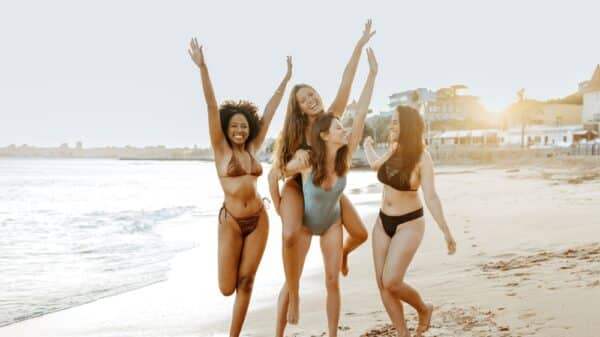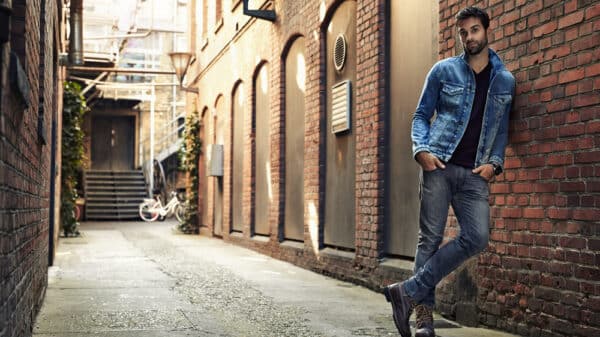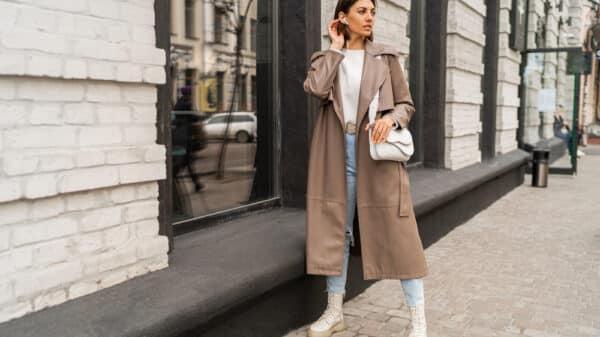
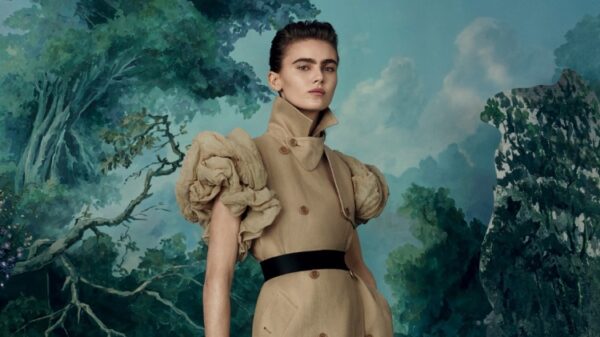

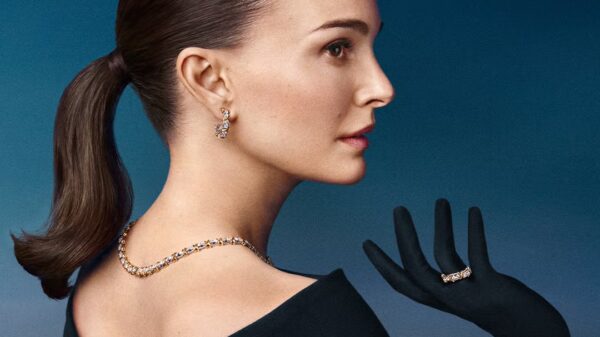



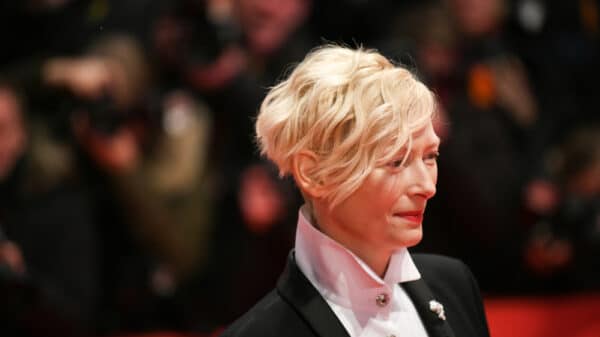
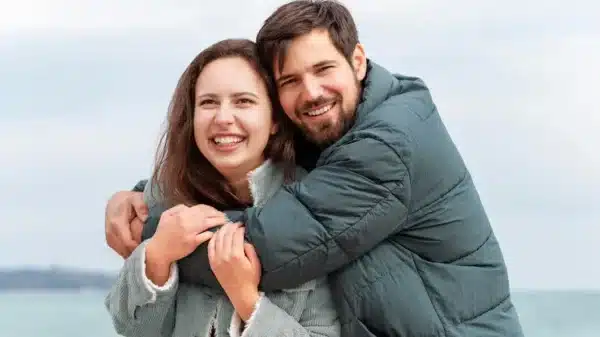

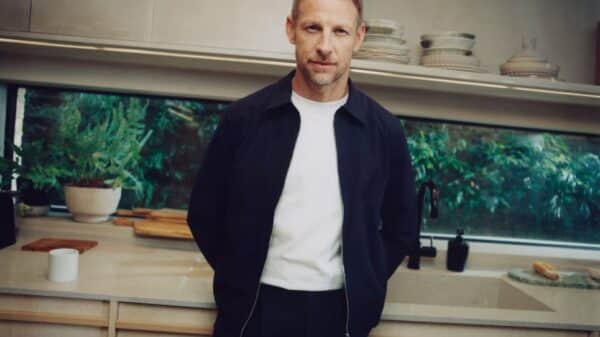
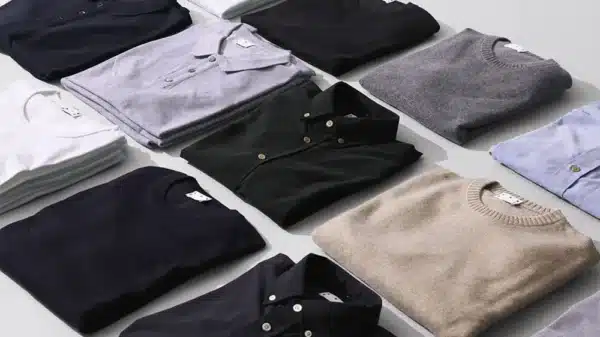
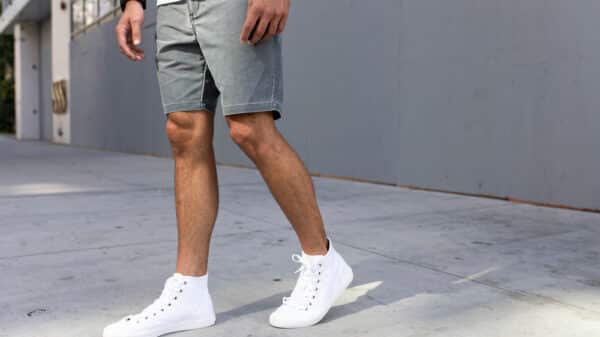

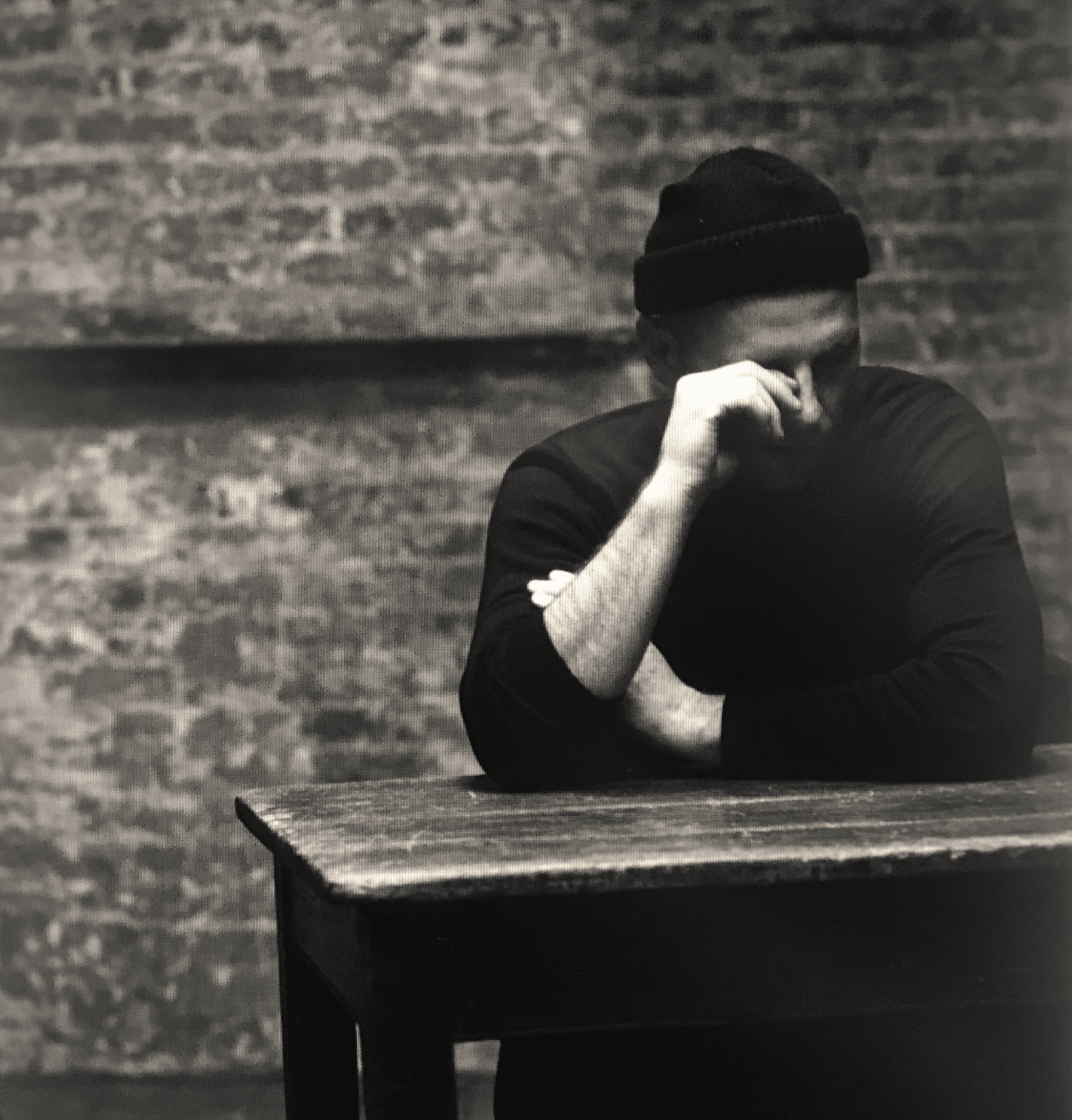
Andrew Harrington’s photographs feel settled the moment they appear. They don’t call out or compete for notice. Instead, they occupy the frame with a composed assurance, as if aware that attention will arrive on its own terms. Many of the images seem suspended in a moment of hesitation: a figure poised but unmoving, a gaze turned just far enough away to resist intimacy. What Harrington produces feels less like a moment seized than a moment consciously chosen.
Across editorial work for Vogue Australia, Vogue Italia, and Financial Times HTSI, as well as campaigns for global fashion brands such as Prada, ZARA, Urban Outfitters, and Anthropologie, Harrington has built a practice that avoids obvious signatures. There is no single device or stylistic shorthand that explains the work. Instead, coherence emerges through a steady, deliberate way of looking. His images are governed by balance, spacing, and restraint. They offer no immediate explanation, assuming instead that the viewer is willing to slow down and engage.
A notable quality of the work is its lack of urgency. In contrast to an image culture driven by speed and immediacy, Harrington’s photographs stretch time rather than compress it. When motion blur appears, it functions not as a flourish but as a trace of duration—proof that time has passed through the frame. Movement is acknowledged without overwhelming the image. Fashion is present, but never overstated. Atmosphere and inner life are given as much significance as garment or form.
Harrington’s visual sensibility was shaped early through years spent assisting some of the most exacting photographers in contemporary fashion. Working closely with figures such as Mikael Jansson and David Sims exposed him to an approach rooted in discipline and rigor rather than expressive excess. In those environments, nothing was incidental. Composition, light, timing, and control were treated as fundamental building blocks. Assisting at that level offered a clear understanding of how powerful images are refined through repetition, selection, and restraint.
That foundation continues to inform his own practice. Harrington’s photographs carry a clear respect for structure and economy. On set, his presence is understated. Direction is minimal, interventions are precise. A small adjustment in distance, a moment of waiting, a refusal to rush—these decisions shape the final image. Resolution comes through attentiveness rather than assertion.
Many of his editorial images read like partial scenes from a larger, unseen sequence. Faces are cropped or turned away, gestures feel unfinished, moments appear interrupted. The suggestion of narrative is strong, but its boundaries remain undefined. This openness is intentional. Harrington’s work leaves space for ambiguity, allowing what is omitted to hold as much weight as what is revealed.
That same sensibility extends into his commercial work. He is often granted wide creative oversight, including the direction of motion projects and close involvement in post-production alongside still imagery. These responsibilities signal trust in his ability to shape a visual language from initial concept through final execution. While the scale and remuneration of these commissions place him comfortably among the top tier of fashion image-makers, the work itself remains measured and restrained.
At the core of Harrington’s practice is a refined sense of when enough is enough. In an industry saturated with visual noise, his images feel edited before the shutter is released. There is no reliance on spectacle or excess. Each photograph appears deliberate, considered, and complete. The image doesn’t perform for attention. It simply holds.
Andrew Harrington’s photography is carefully built rather than spontaneous, but never stiff. It reflects a career grounded in structure, responsibility, and restraint. The resulting body of work feels quiet within an overwhelming visual landscape—unhurried, patient, and confident. These photographs don’t ask to be consumed. They wait, certain that when attention arrives, it will linger.